What does the ticket include?
Your place on one of three visits: the weekday Historical tour, the weekend Palazzo Bo & Gio Ponti tour, or the weekend self-guided entrance.
Read more
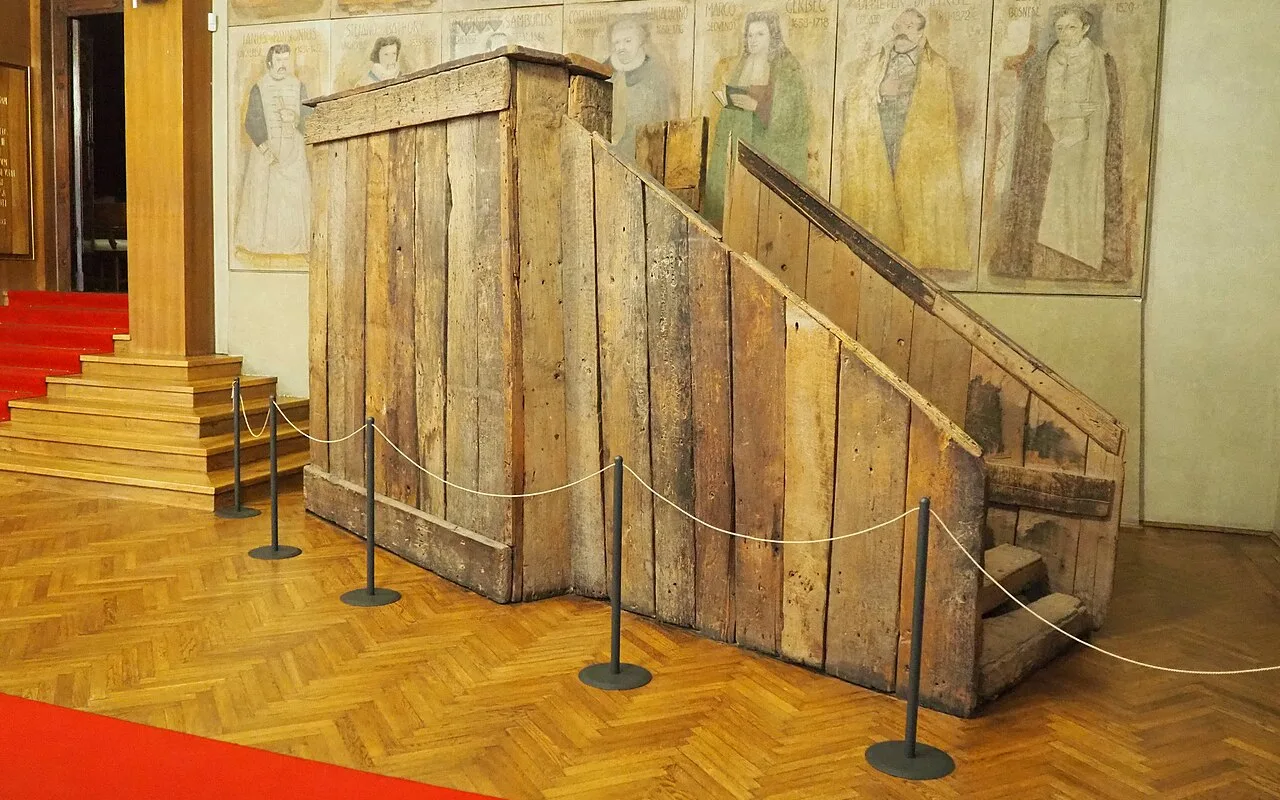
All three take in the Cortile Antico, the Aula Magna, Galileo's lectern in the Sala dei Quaranta and the Anatomical Theatre of 1595. We book your chosen date and departure and email you the e-ticket.
Is the visit guided or can I walk around on my own?
On weekdays, Palazzo Bo is seen only on a guided tour — there is no independent walk-in access. On Saturdays, Sundays and public holidays you can choose the self-guided entrance instead: a timed entry with on-site audio points, at your own pace, alongside the guided departures.
Which departures are in English?
Guided departures run in both Italian and English, and you choose the language when you pick your time.
Read more
English departures currently run three times a day — on weekdays at 11:30, 13:30 and 16:30, and on Saturdays, Sundays and public holidays at 11:30, 14:30 and 16:30. The self-guided entrance has no language: its audio points are available in English.
How long does the tour last?
The Historical tour lasts about 45 minutes. It moves at a steady pace through the Cortile Antico, the Aula Magna, the Sala dei Quaranta and the Anatomical Theatre, so you won't be standing around waiting between rooms.
Can I climb the tiers of the Anatomical Theatre?
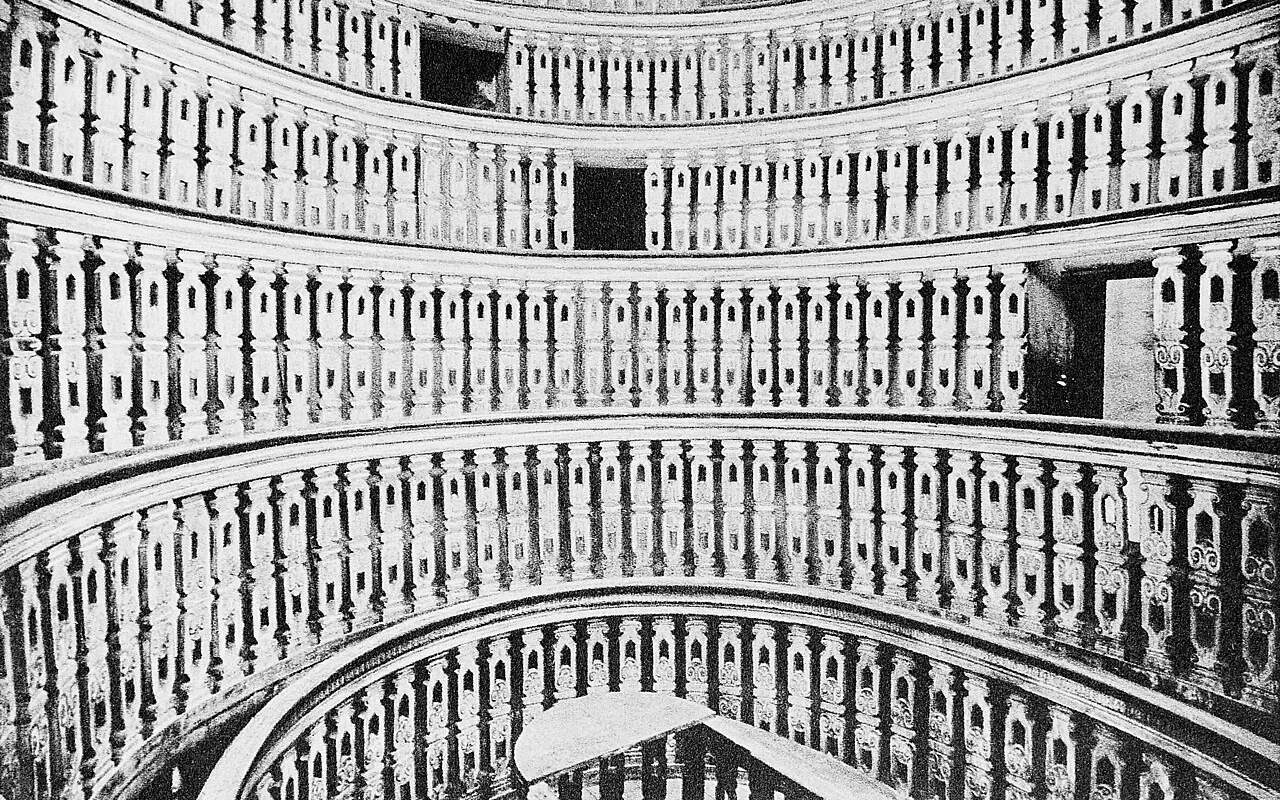
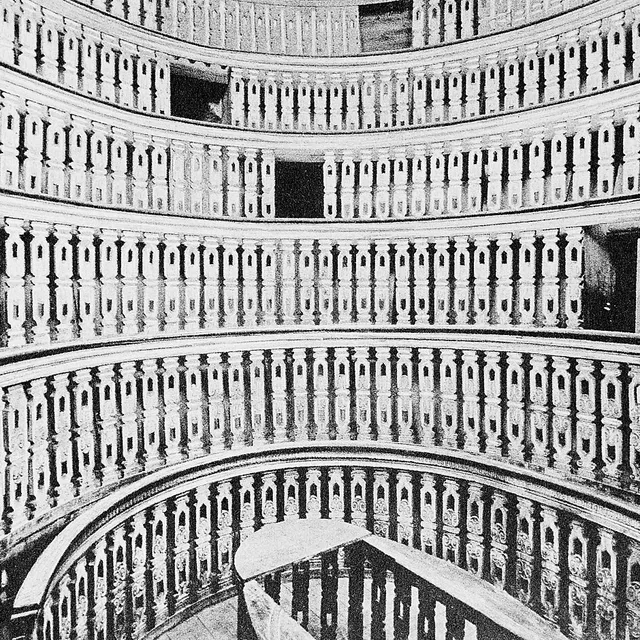
No. Access to the tiers has never been permitted, for any visitor. You view the theatre from the original floor at the centre, the same vantage the professor once used, and look up into the wooden rings above you.
Who qualifies for the reduced ticket?
The youth ticket covers visitors aged 6 to 25 and the senior ticket those aged 65 and over, on every route. Carry valid photo ID that shows your age, as it's checked at the entrance.
Do children under 6 need a ticket?
No. Very young children are admitted free by the university, so you don't need to buy a ticket from us for them — just bring proof of age and keep them with an accompanying adult throughout the guided visit.
What's the difference between the weekday and weekend tours?
The weekday Historical tour covers the Renaissance core: the Cortile Antico, the Aula Magna, the Sala dei Quaranta and the Anatomical Theatre.
Read more
The weekend route, Palazzo Bo and the Twentieth Century of Gio Ponti, adds the palace's 1930s–40s interiors — designer Gio Ponti's furnished Rectorate and graduation halls — on top of the same historic rooms.
How and when will I get my ticket?
After you book, our team arranges your dated entry and departure and emails you the e-ticket. You show it on your phone or a printout at the meeting point on the day.
Is Palazzo Bo still a working university building?
Yes. It remains the historic seat of the University of Padua and houses the Rectorate and the School of Law. Visits are timed and guided in part because it is a functioning academic building, not only a museum.
Where do I meet for the tour?
The ticket office and meeting point sit in the passage between the palace's two internal courtyards, reached from the Via VIII Febbraio entrance. Your e-ticket confirms the exact meeting instructions for your date.
Is Palazzo Bo suitable for children?
Older children with an interest in history or science tend to enjoy it, particularly the Anatomical Theatre. The tour is a standing, walking visit with stairs between rooms, which can be a lot for very young children over 45 minutes.
Is the building accessible for visitors with reduced mobility?
Palazzo Bo is a Renaissance building with staircases between several of the rooms on the guided route, including the approach to the Anatomical Theatre. If you have specific access needs, tell us when you book and we'll share the current guidance.
How do I get to Palazzo Bo from Venice?
Direct trains from Venice to Padova run every 15 to 20 minutes and take as little as 26 minutes. From Padova station it's about a 20-minute walk to Palazzo Bo, or a short tram ride on line SIR1 to the Ponti Romani stop nearby.
Can I take photographs inside?
Photography without flash is generally allowed in the courtyards and halls. Flash, tripods and filming are restricted inside the Anatomical Theatre and the graduation halls, out of respect for the rooms and other visitors on the tour.
What if my date can't be secured?
All sales are final, in line with the university's own conditions. If the operator cancels a departure or cannot honour your entry, we contact you with an alternative departure or arrange a refund; refunds apply only where entry cannot be honoured on the operator's side.
Is Palazzo Bo part of a UNESCO World Heritage Site?
Not itself, though Padua holds two separate UNESCO listings nearby: the Orto Botanico (1997) and the city's fourteenth-century fresco cycles, including the Scrovegni Chapel (2021).
Read more
Palazzo Bo's own standing rests on eight centuries as the university's living seat, and on the Anatomical Theatre's place in the history of medicine.
Do university students and staff pay for entry?
Members of the University of Padua community enter free, on presentation of their university credentials at the door. This concession is administered by the university itself and doesn't apply to visiting tourists, who book one of the tickets above.
Is there a family ticket?
Yes. The family ticket covers two adults and one, two or three children aged under 18 on a single booking, and it exists for all three routes — the Historical tour, the Gio Ponti tour and the self-guided entrance.
Read more
Tell us how many children are coming when you book; children under 6 enter free and don't need to be counted.
What is Palazzo Bo?
Palazzo Bo is the historic seat of the University of Padua, founded in 1222. The university has occupied this building since 1493, and it still houses the Rectorate and the School of Law.
Read more
Visitors come chiefly for its Renaissance courtyards and for the Anatomical Theatre of 1595, the world's first permanent dissection theatre.
Why is it called Palazzo Bo?
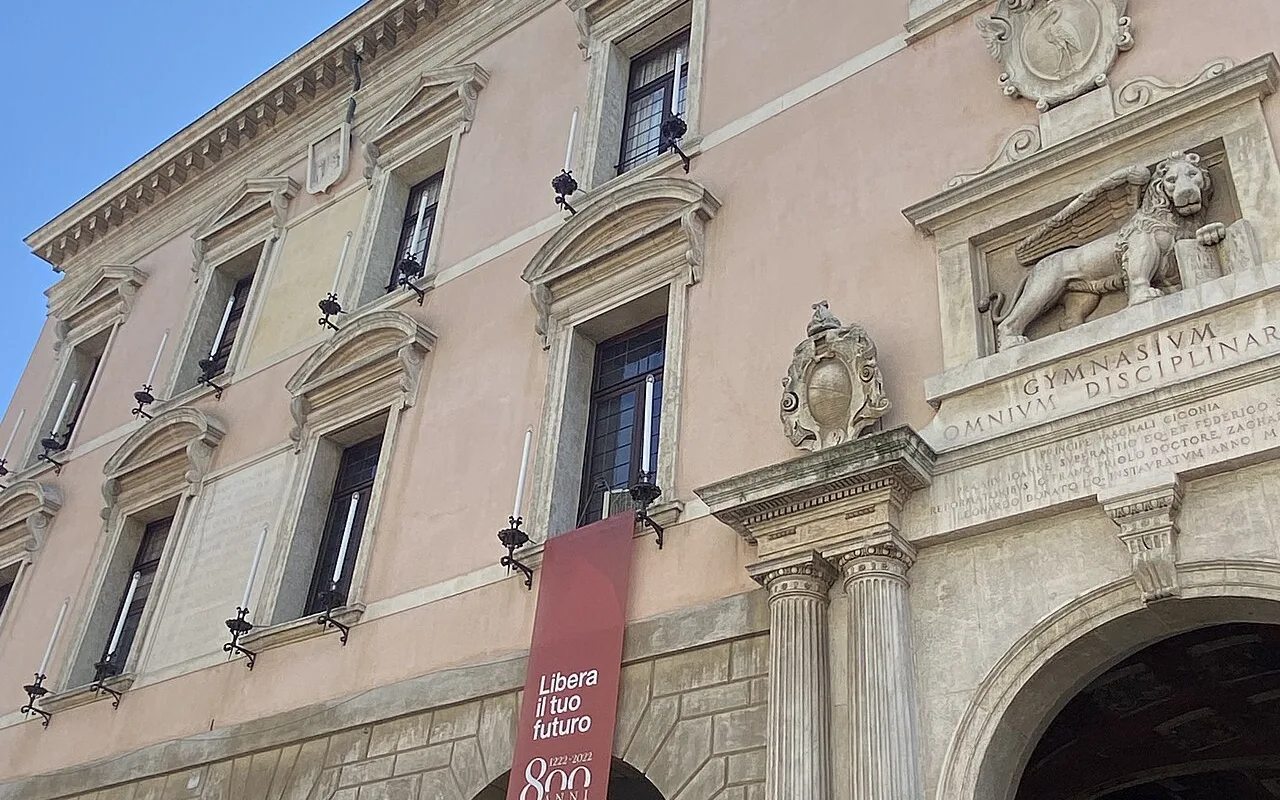
The name comes from the Hospitium Bovis — the Inn of the Ox — an inn that stood on the site before the university took it over in 1493.
Read more
"Bo" is Venetian dialect for ox, and a small ox still marks the palace entrance today.
When was the University of Padua founded?
In 1222, when a group of students and teachers broke away from the University of Bologna in search of greater academic freedom.
Read more
It is one of Europe's oldest universities and marked its eight-hundredth anniversary in 2022.
What is the Anatomical Theatre of Padua?
It is the first permanent theatre ever built anywhere for teaching human dissection, commissioned in 1594 and inaugurated in 1595 by the anatomist Girolamo Fabrici d'Acquapendente and inaugurated on 16 January 1595.
Read more
It survives essentially in its original form: a steep funnel of concentric wooden tiers around a small central floor.
Can visitors climb the tiers of the Anatomical Theatre?
No. Climbing the tiers has never been permitted for visitors. You view the theatre from the original floor at the centre, looking up into the rings above — the same vantage the professor once had, standing among the students rather than above them.
Did anatomists use temporary theatres before this one?
Yes. Earlier Paduan anatomists, including the celebrated Andreas Vesalius decades before Fabrici, taught dissection in wooden theatres built and dismantled for each occasion.
Read more
Fabrici's theatre was the first meant to be permanent, and it changed anatomy teaching across Europe.
Did Galileo really teach at Palazzo Bo?
Yes. Galileo Galilei was professor of mathematics at Padua from 1592 to 1610, and later called those eighteen years the happiest of his working life.
Read more
He lectured in what is now the Aula Magna, and his lectern is preserved in the neighbouring Sala dei Quaranta.
What is the Sala dei Quaranta?
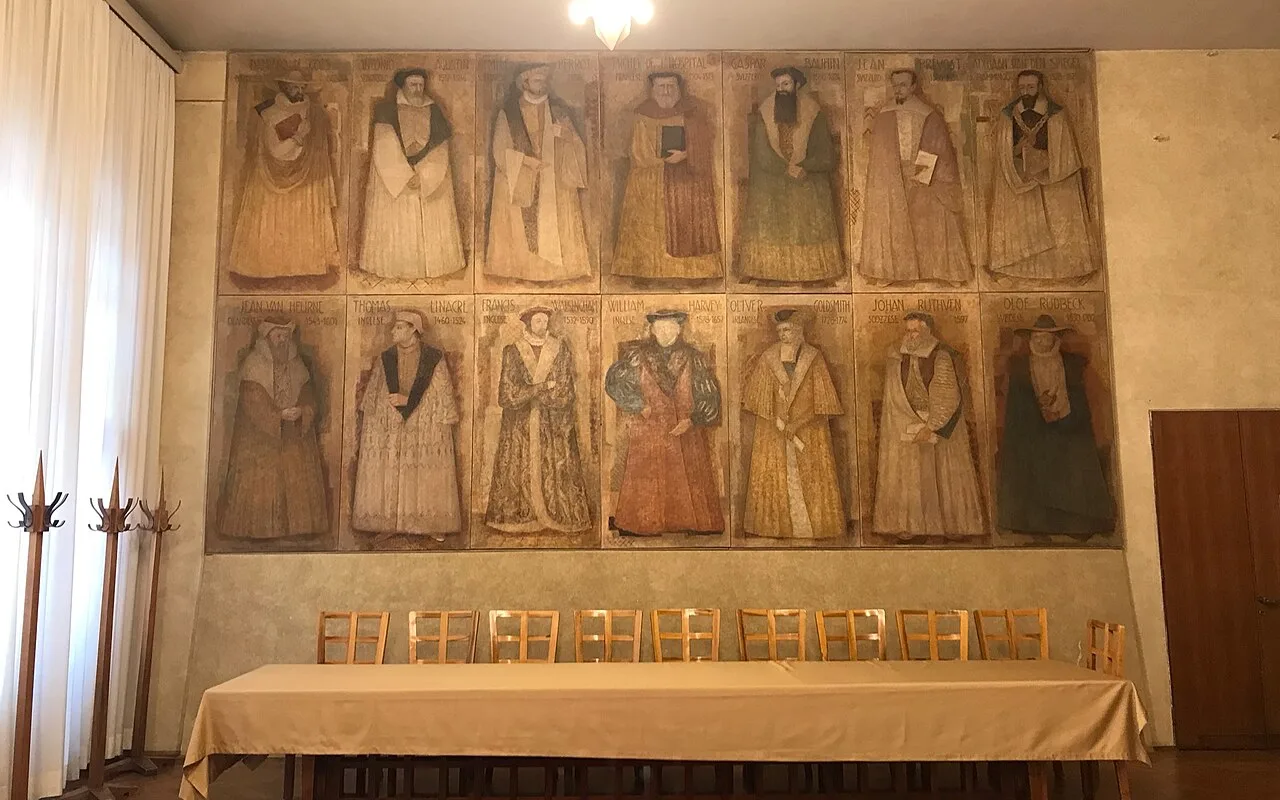
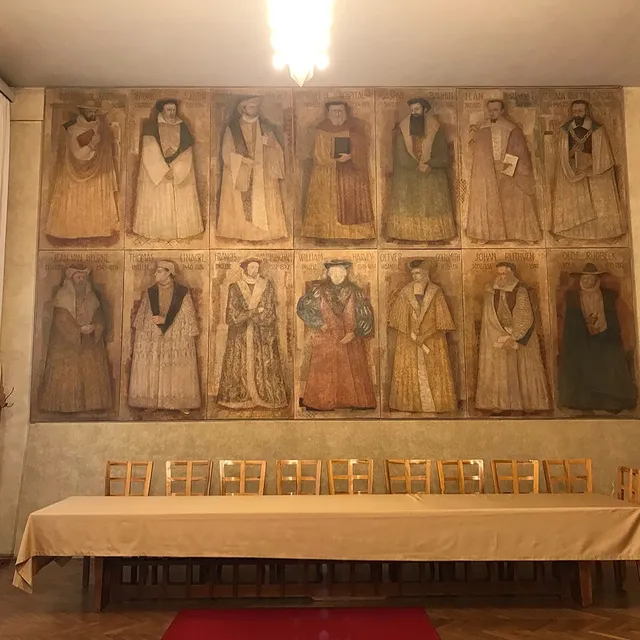
The Hall of the Forty, an antechamber to the Aula Magna named for forty portraits of scholars who taught or studied at Padua between the fourteenth and nineteenth centuries.
Read more
Galileo's own lectern is preserved here, and it was also the setting for Elena Cornaro Piscopia's 1678 doctoral defence.
Who was Elena Cornaro Piscopia?
A Venetian noblewoman who, on 25 June 1678, defended a doctorate in philosophy connected to Palazzo Bo and became the first woman in the world to earn a university degree.
Read more
Public interest was so great her examination moved to Padua's cathedral to accommodate the crowd.
What is the Cortile Antico?
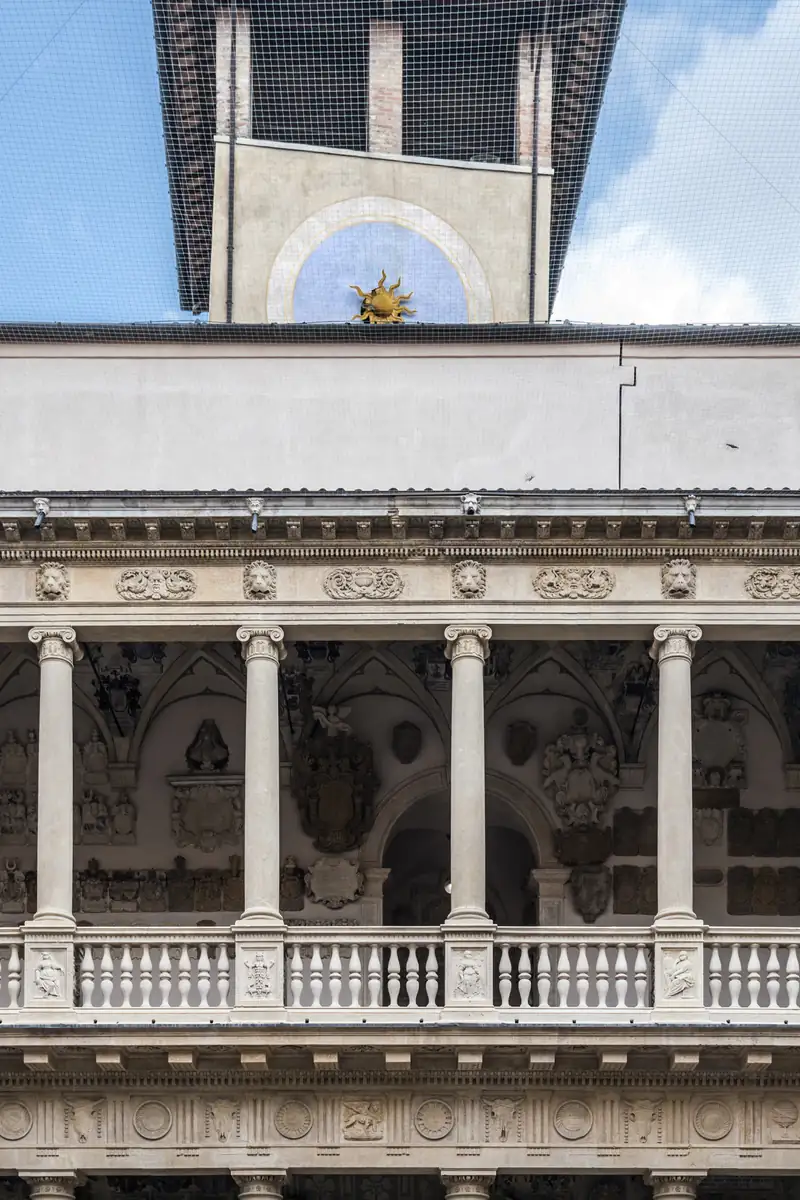
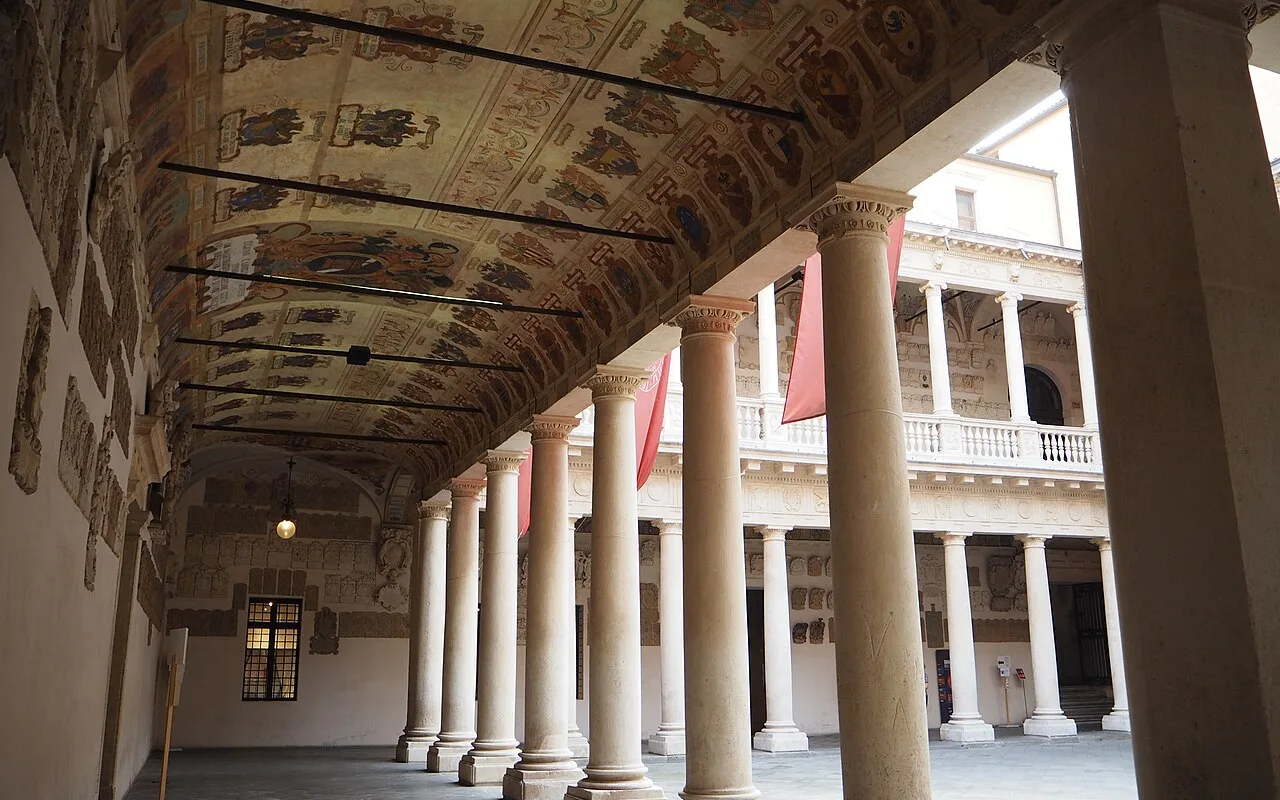
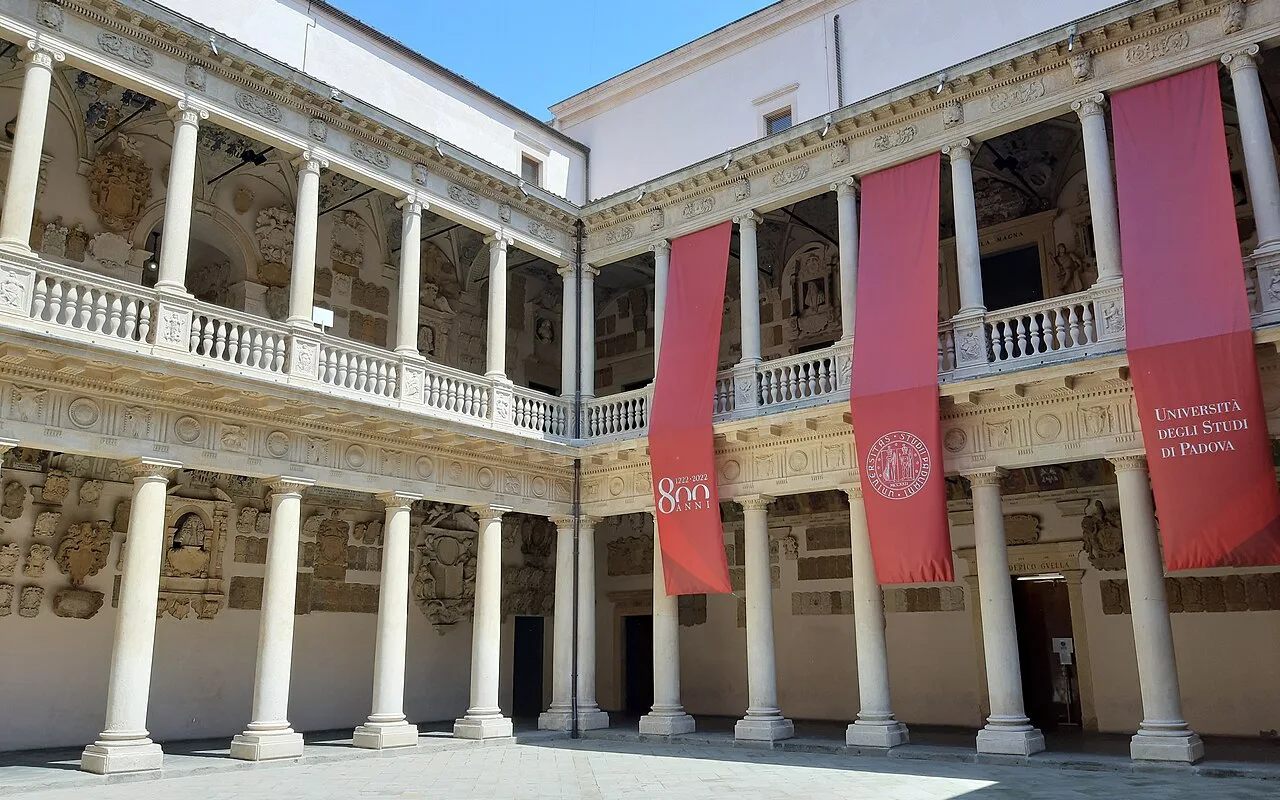
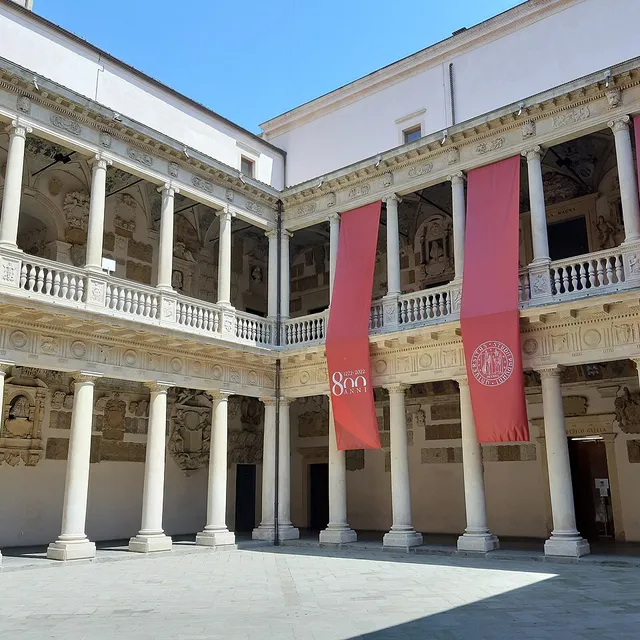
The Old Courtyard, the Renaissance heart of Palazzo Bo, rebuilt by the architect Andrea Moroni in the second half of the sixteenth century.
Read more
Its two tiers of columned loggias carry hundreds of carved coats of arms honouring rectors, professors and historic student communities.
Who was William Harvey and what is his link to Palazzo Bo?
William Harvey was an English physician who studied at Padua from 1599 and graduated in 1602, taught by Girolamo Fabrici, the Anatomical Theatre's founder.
Read more
Fabrici's discovery of valves in the veins fed into Harvey's later work describing the circulation of blood.
What did Gio Ponti do at Palazzo Bo?
From the late 1930s into the early 1940s, the designer Gio Ponti furnished the palace's ceremonial rooms — the Rectorate, the Sala dei Quaranta, the Aula Magna and the four graduation halls — with around five hundred pieces of his own furniture.
Read more
These rooms are shown only on the weekend route.
How long does the Historical tour take?
About 45 minutes, moving through the Cortile Antico, the Aula Magna, the Sala dei Quaranta and the Anatomical Theatre with a guide.
Read more
The weekend route, which adds the Gio Ponti interiors, runs somewhat longer.
Is Palazzo Bo a UNESCO World Heritage Site?
Not itself. Padua holds two separate UNESCO listings nearby — the Orto Botanico (1997) and the city's fourteenth-century fresco cycles including the Scrovegni Chapel (2021) — but Palazzo Bo's significance rests on its unbroken academic history and the Anatomical Theatre's place in medical history rather than a UNESCO listing of its own.
Why were the dissected bodies never from Padua or Venice?
Bodies used in the Anatomical Theatre came by custom from among the executed from outside both Padua and Venice, so that neither city had to see one of its own on the dissection table.
Read more
It reflects the delicate social position anatomy held even as it was formally endorsed by the state.
When did the Anatomical Theatre stop being used for dissections?
It remained in continuous use for close to three hundred years, until 1872, when Padua's growing medical school finally outgrew Palazzo Bo and relocated to purpose-built premises elsewhere in the city.
Read more
The theatre itself was preserved rather than altered.
Is Palazzo Bo still part of a working university?
Yes. It remains the historic seat of the University of Padua and houses the Rectorate and the School of Law today, which is part of why visits run on timed guided tours rather than free walk-in access.
What's the best way to combine Palazzo Bo with a trip from Venice?
Take a direct train from Venezia Santa Lucia to Padova — as little as 26 minutes — then walk or tram to Palazzo Bo for your booked departure, before spending the rest of the day on Padua's other sights, all within walking distance of each other in the historic centre.